
Iron Ore Reverse Flotation: Cationic Collector Selection
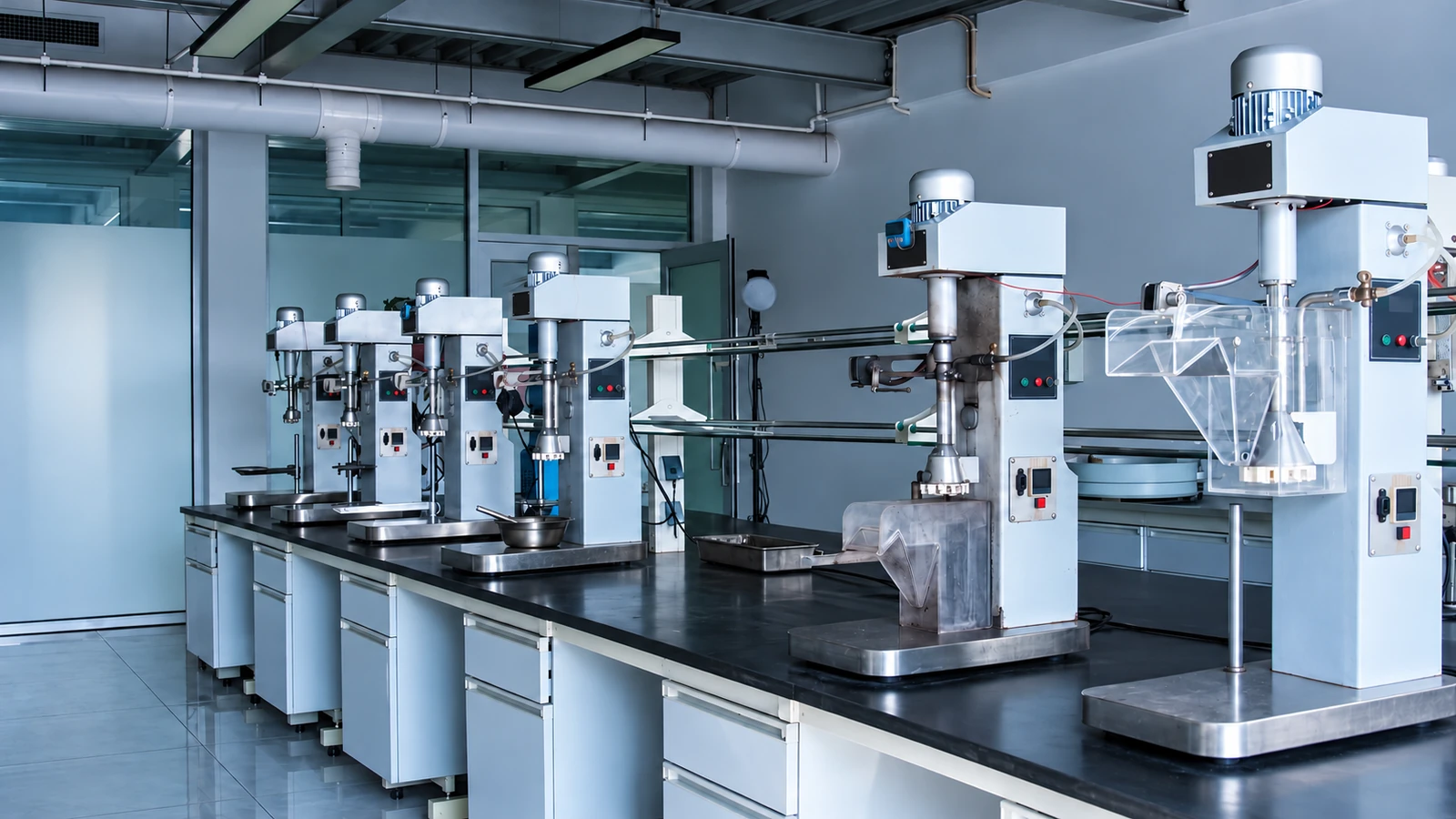
Cationic collectors for iron ore reverse flotation are selected to remove silica-bearing gangue into the froth while retaining the target iron minerals in the non-froth concentrate. The choice should reflect which minerals carry the silica, how well they are liberated, and how the collector behaves with the depressant, pH and process water. A lower concentrate SiO₂ grade is useful only when the associated iron distribution remains acceptable. For quartz-rich feeds, amine-based collectors are common candidates, but one product or dosage will not suit every ore. Residual iron-bearing silicates, fine-particle entrainment and inconsistent reagent preparation can each create problems that more collector alone will not solve. Understanding those differences makes product screening more informative and supplier discussions more specific.
What Does a Cationic Collector Float in Iron Ore Reverse Flotation?
In the reverse cationic flotation route discussed here, the collector promotes the flotation of unwanted silica-bearing minerals. The principal iron concentrate is recovered from the non-froth stream.
| Stream | Intended separation | What the result must show |
|---|---|---|
| Froth product | Removal of quartz and other responsive gangue | Which minerals were rejected and how much iron accompanied them |
| Non-froth concentrate | Retention of target iron minerals | Acceptable silica content together with the required iron quality and recovery |
Adsorption of a collector can make a mineral surface more hydrophobic, enabling attachment to air bubbles. However, amines can interact with iron-mineral surfaces as well as quartz. Selectivity therefore also depends on the depressant system, commonly involving starch, and the surrounding pulp chemistry.
Fine particles may additionally enter the froth with water through entrainment. This distinction matters: iron in the froth does not, by itself, prove that the collector has floated the iron mineral.
Which Ore Characteristics Determine Collector Suitability?
Quartz and Iron-Bearing Silicates Require Different Assessment
A bulk SiO₂ assay measures silica content without identifying its mineral source. Two feeds with similar iron and silica grades may contain very different proportions of free quartz, iron-bearing silicates and composite particles.
For a feed dominated by liberated quartz, collector screening can focus on quartz rejection while maintaining iron-mineral depression. When iron-bearing silicates contribute substantially to the silica, their response must be considered separately. A reagent effective on quartz cannot automatically be assumed to remove every silicate mineral.
Starch can depress certain iron-bearing silicates as well as iron oxides. If these minerals remain with the iron oxides, increasing a quartz collector's dosage may produce little improvement in final silica. Conversely, rejecting an iron-bearing silicate can lower total iron recovery even when retention of the target iron oxides changes little. Mineral identification is therefore necessary to interpret the apparent trade-off.
Liberation, Particle Size and Slimes Change the Separation Problem
Collector chemistry cannot create mineral liberation. Where quartz remains locked in an iron-rich composite particle, floating that particle may reject silica and iron together. A persistent silica limit can therefore reflect the feed's liberation characteristics, even when the collector is working on exposed quartz surfaces.
Fine material introduces a different set of questions. Increased surface area can alter reagent demand, while slime coatings can change the surfaces available for adsorption. Fine iron-rich particles may also be carried into a wet froth. These mechanisms require different responses, so a single overall recovery figure is insufficient for diagnosis.
| Ore feature | Why it matters | Useful evidence |
|---|---|---|
| Mainly liberated quartz | Supports assessment of quartz rejection and iron retention | Mineralogy and product assays |
| Significant iron-bearing silicates | Silica rejection may also redistribute iron | Mineral identification and iron deportment |
| Poorly liberated composites | Sets a limit on separation by surface chemistry alone | Liberation assessment by particle size |
| High fines or slimes content | Can change adsorption, reagent demand and entrainment | Size-by-size assays and water recovery |
How Do Amine Types Differ in Iron Ore Flotation?
Ethermonoamines and Etherdiamines as Candidate Collectors
Ethermonoamines and etherdiamines are representative amine-based collectors used in iron ore reverse flotation. They are useful comparison categories, but they do not describe every commercial cationic collector or blended formulation.
Their molecular structures differ, including the number of amine groups. That difference can affect interactions with mineral surfaces and the solution environment. Product performance also depends on the particular hydrophobic group, formulation and preparation conditions. The label “diamine” consequently does not establish that a product will be more selective or require less reagent than a monoamine on a given feed.
A useful comparison asks how each candidate separates the actual minerals under the intended depressant and water conditions. This includes its effect on froth behaviour: amine collectors can influence bubble formation and froth stability as well as mineral collection.
Why Chemical Family Alone Does Not Predict Performance
Check the technical identity of the supplied grade rather than interpreting a trade name as a chemical specification.
| Comparison point | What to establish |
|---|---|
| Collector chemistry | The declared chemical family or application characteristics of the specific grade |
| Formulation | Active-content basis and any preparation requirements relevant to comparing products |
| Mineral response | Silica rejection and iron distribution on the same representative feed |
| Froth behaviour | Water carryover, froth handling and the relationship between froth changes and separation results |
| Operating tolerance | Whether acceptable results persist across the site's relevant feed and water variations |
Different products should first be compared on a clearly stated dosage basis, then across their useful response ranges. Equal active mass can make the inputs easier to interpret, but it does not make different chemistries equally effective. The meaningful outcome is a reproducible separation at the required concentrate quality, with the associated reagent consumption understood.
How Do pH and Starch Control Selectivity?
pH Changes Amine Speciation and Mineral-Surface Interactions
Pulp pH affects both the mineral surface and the balance between protonated and unprotonated amine species. For protonatable amine groups, increasing pH shifts the balance toward the unprotonated form. Changes in this balance can influence adsorption, association in solution and froth behaviour.
The useful operating window must therefore be established for the collector and ore together. A pH value reported for another mine, a different amine or a single-mineral experiment is a starting point for investigation, not a plant setpoint.
During screening, record the pH actually reached during conditioning and flotation, rather than only the amount of alkali added. Ore buffering, process water and reagent additions can change the measured condition. If collector comparisons are made at different pH values unintentionally, the apparent product difference may partly reflect the pulp chemistry.
Starch Preparation and Conditioning Affect Iron Mineral Depression
In hematite systems, starch can hinder amine adsorption and help maintain a hydrophilic surface. It can also aggregate fine hematite, which may affect transport into the froth. The response depends on the starch product, preparation and conditioning conditions.
Consequently, a trial described only as “collector at a fixed starch dose” may leave important variables undefined. Record how the starch was prepared, the working-solution concentration, conditioning time and addition sequence. Use the preparation method appropriate to the particular starch product; do not assume every grade is interchangeable.
Collector and depressant doses should be interpreted together. More collector can increase unwanted collection or alter froth behaviour, while more starch does not necessarily resolve a silica problem. The outcome depends on which minerals are responding and how the reagents interact under the selected conditions.
For example, if concentrate silica remains high while iron retention is strong, determine whether the residual silica is liberated quartz, depressed silicate gangue or locked material. Those findings lead to different investigations. Changing collector dosage before identifying the silica source can obscure the actual limitation.
How Do Water Chemistry and Reagent Preparation Affect Collector Response?
Calcium, Magnesium and Residual Reagents in Process Water
A collector screened in fresh water may behave differently in plant process water. Dissolved ions, residual reagents and suspended material can change mineral surfaces and the response of the depressant–collector system.
Calcium and magnesium should not automatically be treated as equivalent simply because both contribute to hardness. Their effects depend on the chemical environment, including pH and the starch system. A hardness result is useful background, but may not identify the species responsible for a change in flotation behaviour.
Where water variation is relevant, compare candidates using water representative of the operating circuit. Record the return-water contribution and available water analysis alongside the flotation result. A paired fresh-water and process-water comparison can help identify whether water chemistry is contributing to an observed difference; further analysis is needed to attribute it to a specific ion or residue.
Product Preparation Is Different from Pulp Operating Conditions
Product solubility, stock-solution preparation and flotation conditions are separate considerations. A water-soluble collector does not remove the need to control pulp pH, and a product's viscosity at one temperature does not establish its flotation performance at that temperature.
QINGQUAN lists its iron ore cationic collector for the flotation of quartz, pyroxene and other silicate minerals in reverse-flotation desilication. The product is described as water-soluble, with no acid dissolution required for preparation. This preparation information leaves the pulp pH, dosage and suitable temperature range to be established for the specific application.
For any commercial candidate, confirm the working-solution preparation instructions and dosing basis for the supplied grade. Distinguish active content from working-solution concentration and, where relevant, the product's degree of neutralization. Record preparation-water and pulp temperatures separately when temperature is part of the investigation. Consistent preparation makes it possible to determine whether a changed flotation response came from the chemistry in the cell or from inconsistent reagent delivery.
What Do High Silica and Iron Losses Reveal?
High concentrate silica and increased iron in the froth are observations to investigate, not complete diagnoses. The following checks help relate those observations to the mineral and reagent conditions already discussed.
| Observation | Possible explanation to investigate | First evidence to check |
|---|---|---|
| Concentrate SiO₂ remains high | Poor quartz collection, a different silicate response or locked gangue | Mineral source of the residual silica, liberation and size-by-size assays |
| More collector gives little silica improvement | Liberation limits, reagent interactions, inconsistent delivery or changed froth behaviour | Verified addition rate, pH, starch conditions and assays of both products |
| SiO₂ decreases but total iron recovery also falls | Loss of target iron minerals or intended rejection of iron-bearing gangue | Mineral identity and iron distribution in the froth |
| Froth becomes wetter and contains more fine iron | Increased entrainment may be contributing | Water recovery, particle-size distribution and mineralogical evidence |
| Results change when return-water use increases | Changed dissolved species, residual reagents or suspended material | Representative water analysis and controlled water comparisons |
Distinguishing true flotation from entrainment is particularly important for fine particles. In true flotation, suitably hydrophobic particles attach to bubbles; entrainment transports particles into the froth with water without requiring bubble attachment. A wetter froth is a reason to examine water recovery and particle size, but it does not prove that all observed iron loss is entrainment.
Likewise, a total iron assay cannot identify the mineral carrying that iron. The froth may contain hematite, magnetite, iron-bearing silicates or composite particles. If the objective includes rejecting an iron-bearing silicate, some decrease in total iron recovery can accompany the intended separation. Whether that trade-off is acceptable depends on the concentrate requirements and the actual mineral balance.
Which Test Results Support a Collector Choice?
A candidate deserves further evaluation when its separation is repeatable at the required concentrate quality under representative conditions. A larger froth volume or a single low-silica assay is insufficient.
| Result group | Minimum information to retain |
|---|---|
| Concentrate quality | Total Fe, SiO₂ and other relevant quality requirements |
| Iron distribution | Total Fe recovery, iron reporting to froth and mineral-specific evidence where needed |
| Reagent input | Product identity, dosage, active-content basis if known, and calculation basis such as dry feed mass |
| Test conditions | Ore sample, process stage, pH, starch scheme, water source and relevant operating conditions |
Calculate total Fe recovery from the dry masses and total Fe assays of the corresponding feed and product streams. Compare equivalent process boundaries: a single-stage result cannot be treated as a final circuit result without accounting for the other streams and stages. Total Fe recovery is not hematite or magnetite recovery; those require suitable mineral-phase information.
Evaluate candidates over a practical response range, keeping sample and analytical uncertainty in view. For purchasing decisions, compare delivered reagent consumption at comparable concentrate quality together with the associated iron outcome. A lower price per kilogram cannot establish the lower-cost separation if dosage or acceptable concentrate production differs.
What Should You Confirm Before Shortlisting a Commercial Collector?
Before requesting a recommendation, assemble the ore information already available: principal iron and gangue minerals, feed size distribution, current concentrate results, target quality, process water and the existing reagent scheme. State the main problem clearly—for example, persistent silica in a particular size fraction or increased fine iron in the froth after a water change.
Ask the supplier to confirm the specific grade, intended application, preparation instructions, available technical documentation and the information needed for an appropriate evaluation. Clarify any product data necessary to interpret dosage comparisons. Avoid assuming that a general product description defines a tested operating window for your ore.
QINGQUAN includes an iron ore cationic collector in its flotation reagents range. To discuss its suitability, share your iron ore flotation conditions with QINGQUAN, including the available mineralogy, current reagent scheme and required concentrate specification.
Shortlist collectors that reach the required concentrate quality with an acceptable, understood iron distribution under the intended pH, starch and water conditions. If performance is limited by locked gangue, a different silicate response or fine-particle entrainment, address that limitation before using a higher collector dose as the next step.